Some of my Quester’s group and myself set out on a hot July day to make the 45 minute trek down to Lincoln NE,
to the International Quilt Museum. There were 8 of us, as soon as we pulled into the parking lot I knew we were in for something special.
The International Quilt Museum opened in its current location on the University of NE Campus in 2008 and was completely privately funded. Robert and Ardis James donated 1000 quilts to the university for study. Initially the quilts were housed in a climate controlled area in the Home Economics building. A designated building was in order.
Through generous donations of 130 quilting guilds from 65 countries and funding from the Robert and Ardis James Foundation the Quilt Museum came to life. With unique Architecture by the firms Robert AM Stern Architecture as well as the Architecture firm of Poyner, Macchietto this unique 37,000 s/f structure started to take shape.
From the moment you step in, you are greeted with light and shadows. A small entry then leads you to a small but wonderful gift shop, with everything from T shirts to books, ornaments to embroidered tote bags, and so much more. You hop on an elevator and go up and the world opens up to you. The reception area is shaped like the eye of a needle. Here you sit down and get comfortable and await your docent. The curved windows are playing with the light. Furnished very simply this is a layered space, giving you just a hint of what is to come. There is a paneled wall that is so interesting. Subtle and you think “What’s This” you can’t quite put your finger on it, and then the AHA moment comes. Of course it is a quilt made of wood.
Our docent comes and gives us some history of this very young museum. She tells us of the “James” family and the importance of their very generous contribution. Both in artifacts as well as funding. There was a 13,200 square foot expansion in 2015 once again funded by the James Foundation, to serve as storage and gallery space. We’re informed the museum is the largest publicly held collection of quilts, from 65 countries and dating back to 1600. The stories this building can tell! The museum holds over 11,000 quilts. At any given time about 265 are on display, for 4-6 months. At that time they are removed and rolled and put back in storage for 10 years!!
Our tour began with an interesting denim quilt. I stupidly didn’t get a picture of it. The quilt was draped and scrunched over a kind of make shift bed. The headboard was also made of denim but in the center was a large wooden plaque type thing. Again a hmm. When you look closer you discover that it is the hull of a ship. Its cargo, enslaved people from Africa, with its rack and stack em quarters. The quilt and headboard represent the importance of the “Slave Trade” to the survival of the America’s, and the quilting community. Without the enslaved we would not have had cotton to weave into cloth, without the cloth and the cotton itself we would not have had blankets to keep us warm. This was an eye opening revelation to me. Something I never thought about, and just took for granted. Shame on me!!!
Every rotation tells a specific story. Since it is America 250 a lot of the quilts we saw, were related to our history as a nation. The diversity of this small part of their collection was amazing.
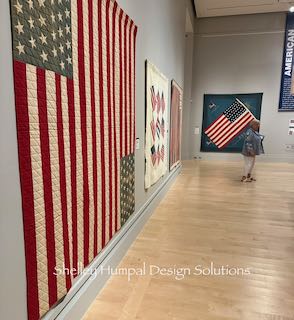
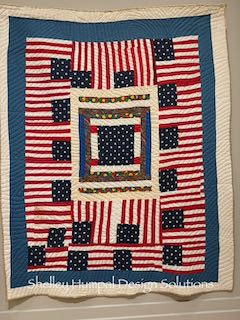
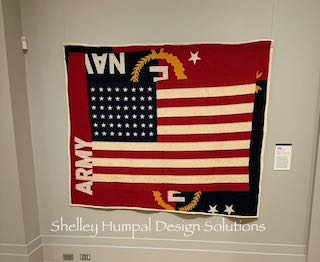
Walking into this gallery with all the red, white and blue was a real treat. Ranging from the mid 1800’s and more contemporary quilts from the late 20th Century.
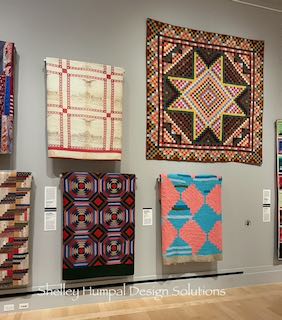
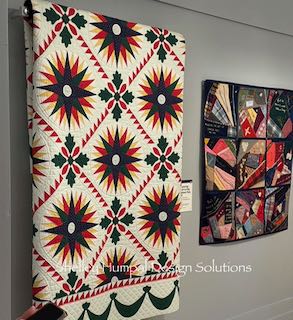
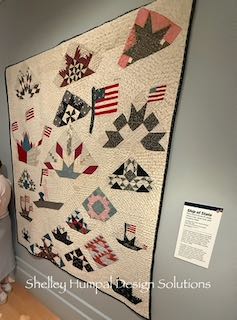
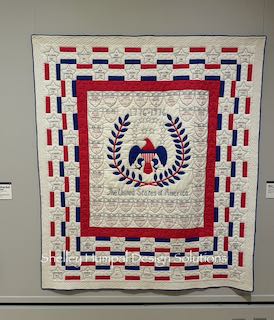
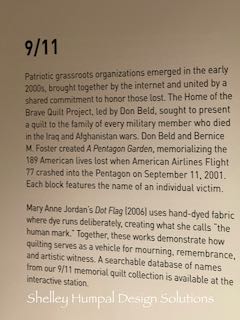
And then there were the political quilts. Women have always used their quilts to express how they really feel. We first walked into a quiet area where there a benches so you can sit. An area of contemplation. 9/11 was the subject matter. There were two very different quilts.
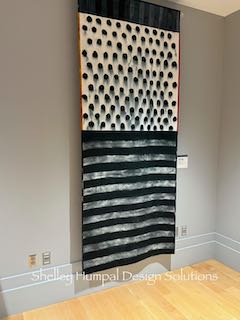
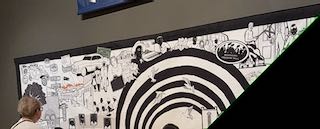
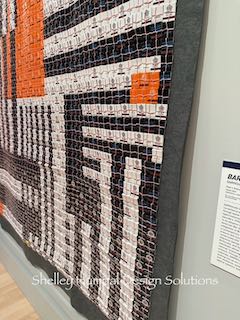
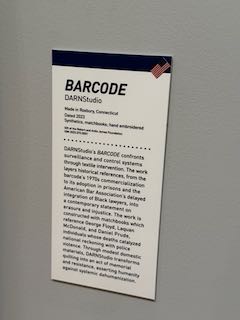
This center quilt called Bar Code is made of match books. It’s such an interesting quilt with each match book tied on and into the stitches. The quilt on the left was a huge piece. Several feet long covering an entire wall. Also political it depicts life in America.
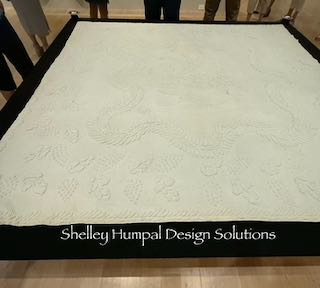
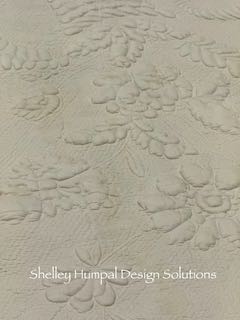
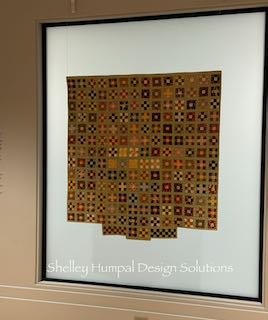
This trapunto quilts slightly elevated off the floor. 19th Century the hand quilting was gorgeous. Trapunto is created by slicing the design in the backing and stuffing individual patterns with extra batting. Creating a very tactile contrast between the “normal” quilting and the pattern. I loved this one. I made some trapunto pillows early on in my marriage, just because I wanted to try it. Had those pillows for years.
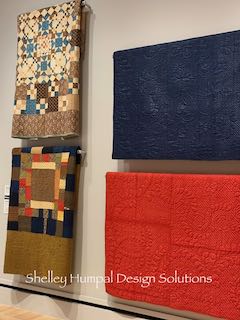
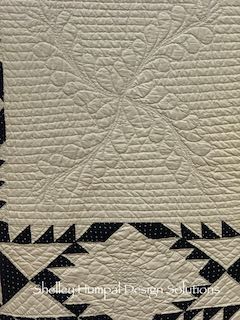
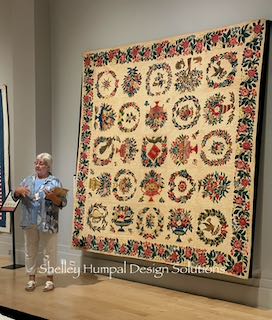
Aplique quilts are still popular today. Often patterned fabric (if you could afford it) was imported, and hard to come by. To make that yardage go farther, quilters would cut out a particular motif and applique’ the pattern to simple cotton cloth, extending the visual impact. Applique’ is a technique that has always fascinated me. When my girls were small I made them the cutest applique’ jumpers. I hope to incorporate the technique in a quilt for myself one of these days.
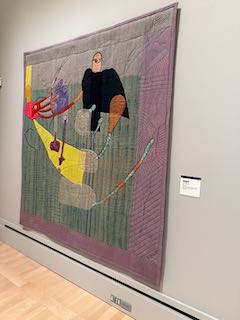
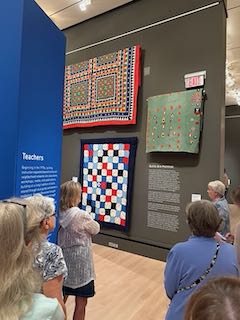
I’m sorry these images are not up to snuff. I was having trouble with my settings. There was so much to see but, I wanted to give you a taste.
Thanks for stopping
Shelley